First AI Kit
A company came to us looking to rethink how they use AI. We created an AI kit with a clear, actionable plan for moving forward.
Project Manager
4 people
7 weeks
AI Governance · Organizational Strategy · Change Management
Slack (communication), FigJam (collaboration), Trello (task management, Kanban)
Double Diamond
Overview
Brick Technology, a Stockholm-based company, reached out as AI adoption inside organizations was accelerating faster than most companies' ability to govern it. As Project Manager, I led a 4-person team through research, diagnosis, and the design of a practical AI governance plan — balancing Brick's culture of trust and autonomy with the need for clear rules, at a time when employees were already using AI tools completely uncontrolled.
The Challenge
Helping a fast-moving tech company navigate AI regulation without losing its culture.
The EU AI Act compliance deadline landed in August 2026, on top of existing GDPR obligations. Most companies were overwhelmed by the pace of change.
A strong culture of trust and freedom, and a highly tech-savvy team already using AI well. The gap wasn't skill, it was structure, and the risk of disrupting a culture people loved.
Brick currently holds a strong market position with little direct competition. As more players enter the space, data transparency and responsible AI practices will become a real differentiator. Getting ahead of governance now is also a future competitive advantage.
1.Discover
Research approach
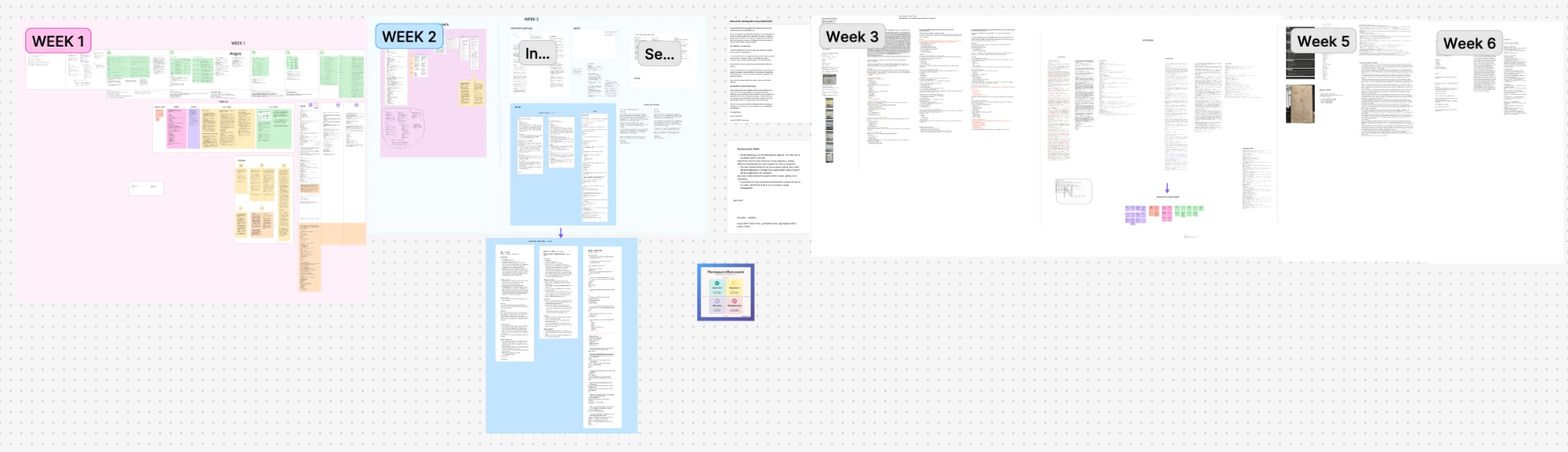
Split into individual, complementary tracks across the team to cover the topic broadly without duplicating effort. Desk research on GDPR/EU AI Act, global benchmarking, and interviews with leadership and employees.
Constraints
Working with Brick during their busiest season meant limited availability and long delays.
Employees were happy with the status quo, so a collaborative approach was needed rather than a top-down one.
Key insight
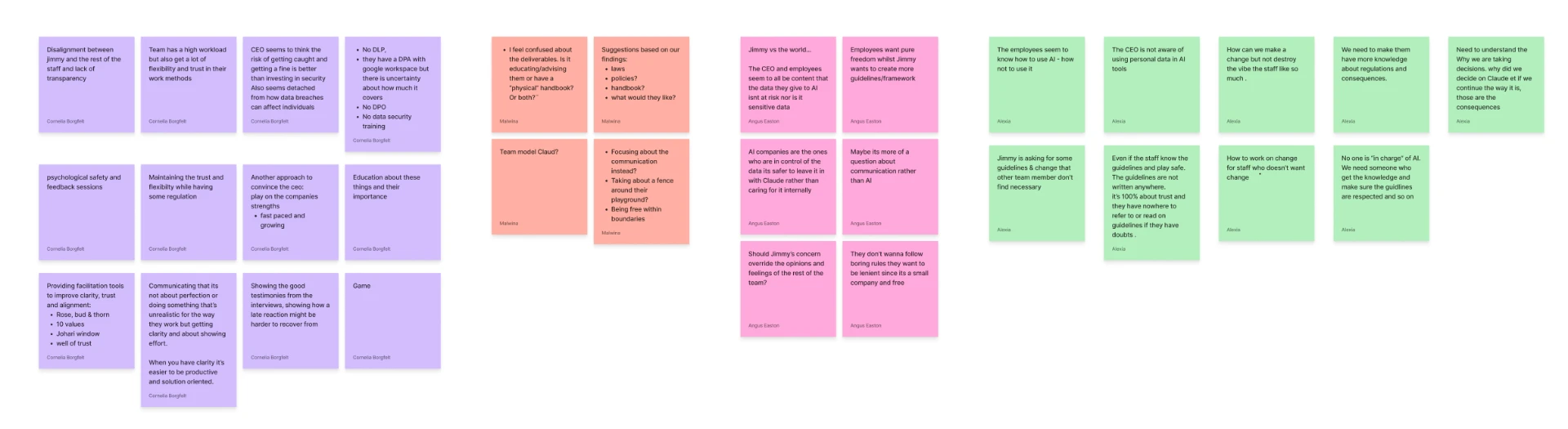
Brick uses customer data extensively and wants to do things by the book, but AI was actually being used informally, with no real visibility or control from leadership.
2.Define
To move from broad research findings to a clear diagnosis, our research and interviews were backed by an Issue Tree (combined with an Impact/Effort matrix), used to break the root problem down into branches and sub-issues, then prioritize which ones were worth acting on first.
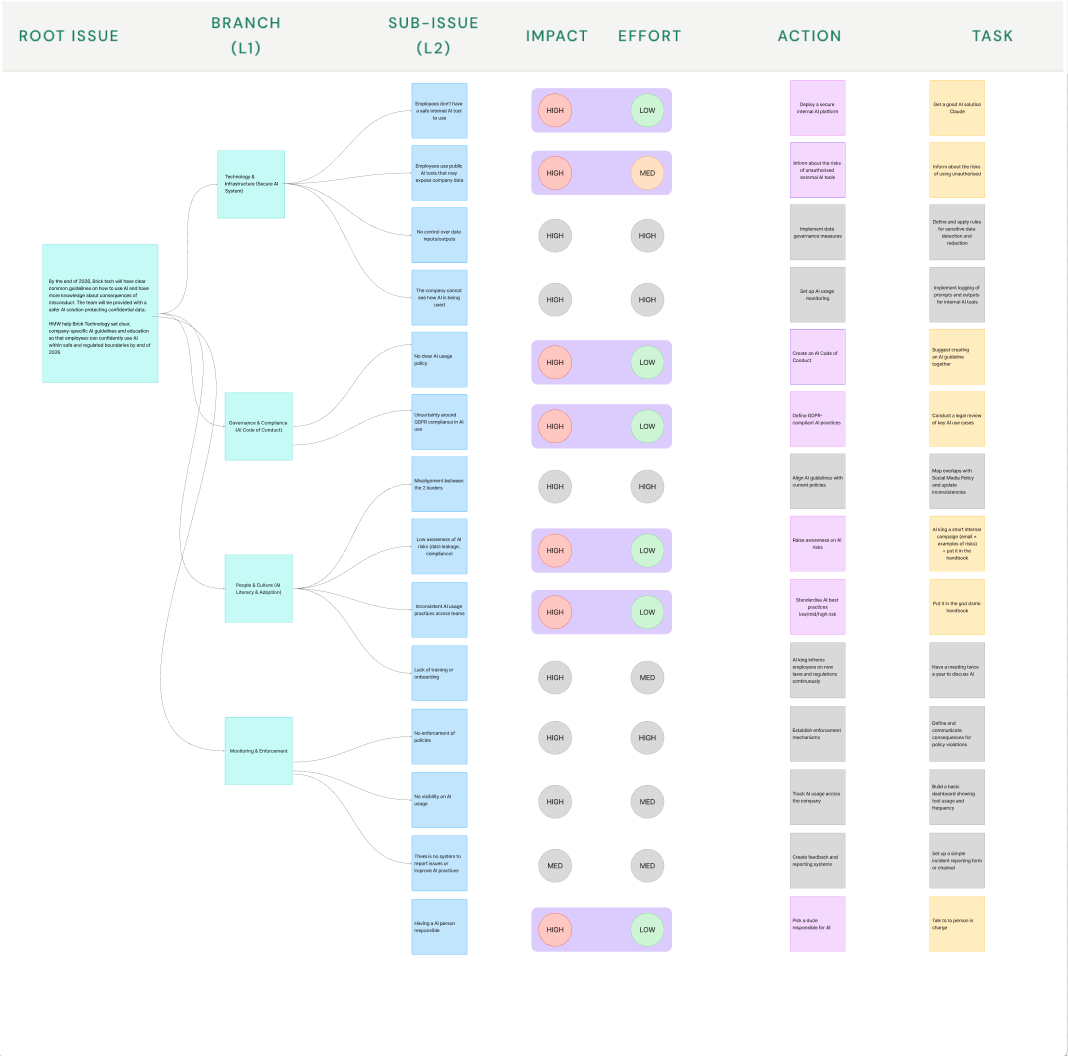
Three core problems emerged:
Shadow AI
Employees using AI tools outside any sanctioned process.
No guidelines
No rules for what could or couldn't be shared with AI tools.
No one responsible for AI
No single owner of AI governance.
3.Develop
Grounding the approach in change management theory
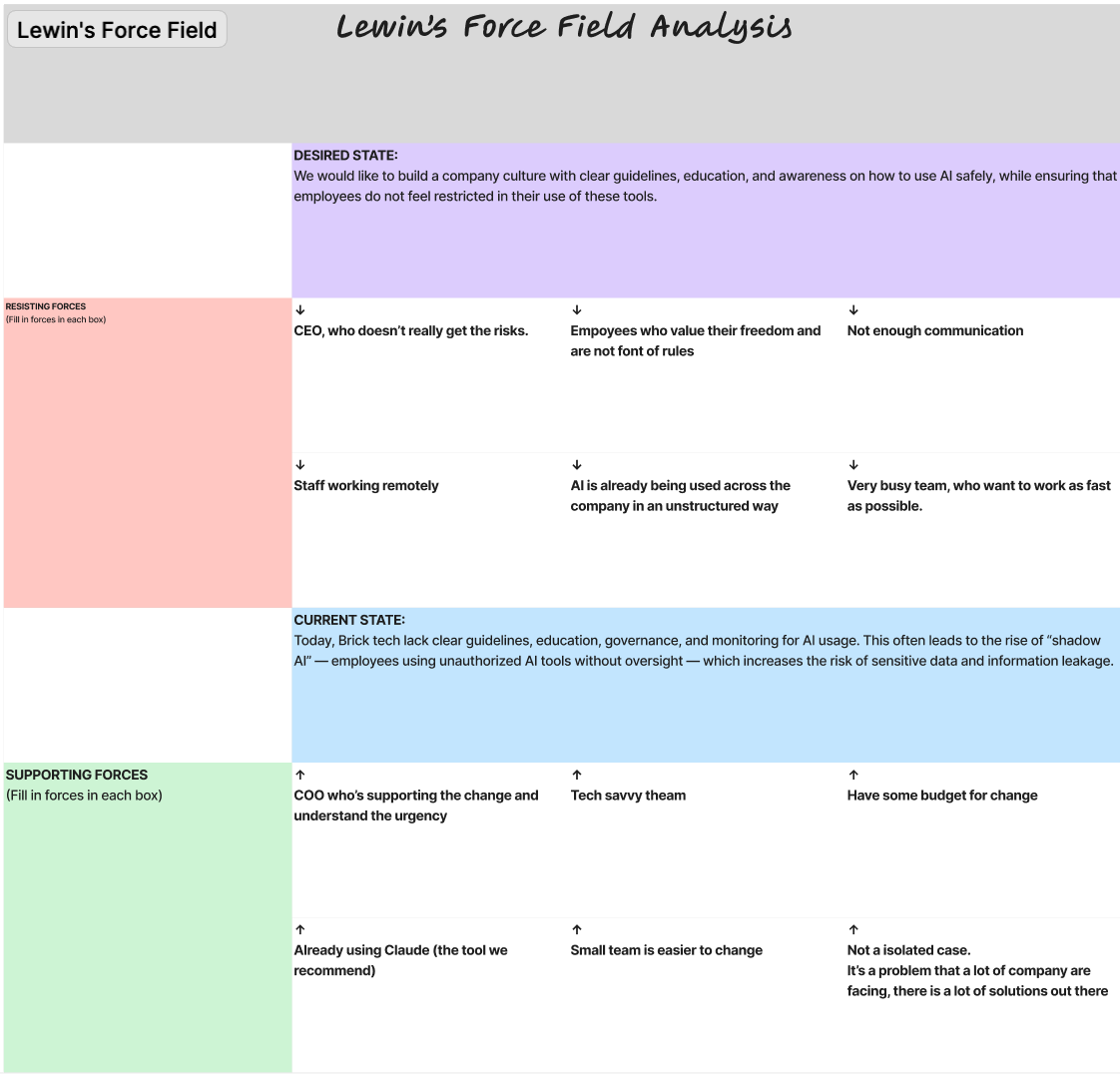
Before designing recommendations, we framed the change itself using two models:
Mapping the forces pushing for change (regulation, risk, competitive pressure) against the forces resisting it (a team happy with the status quo, no bandwidth for new rules), to understand what needed to shift.
Structuring the rollout around Awareness, Desire, Knowledge, Ability, and Reinforcement, rather than just handing Brick a set of rules.
Recommendations
- 01
Choose the right platform
Interviews showed Claude was the most-used AI tool across the team, despite Brick only officially providing Gemini. Employees were relying on personal or free accounts. Following a market analysis, our recommendation was to implement Claude Team as Brick's primary AI platform, closing that gap and directly reducing shadow AI.
- 02
Co-create the guidelines
Grounded in Fair Process theory (Kim & Mauborgne, Harvard Business Review): people accept rules far more readily when they helped create them. So the guidelines were built with the team, not handed down.
- 03
Name an owner
When responsibility belongs to "everyone," it tends to belong to no one. One clear owner was needed, and to stay consistent with Fair Process, the team elected their own AI owner, nicknamed the "AI Guru".
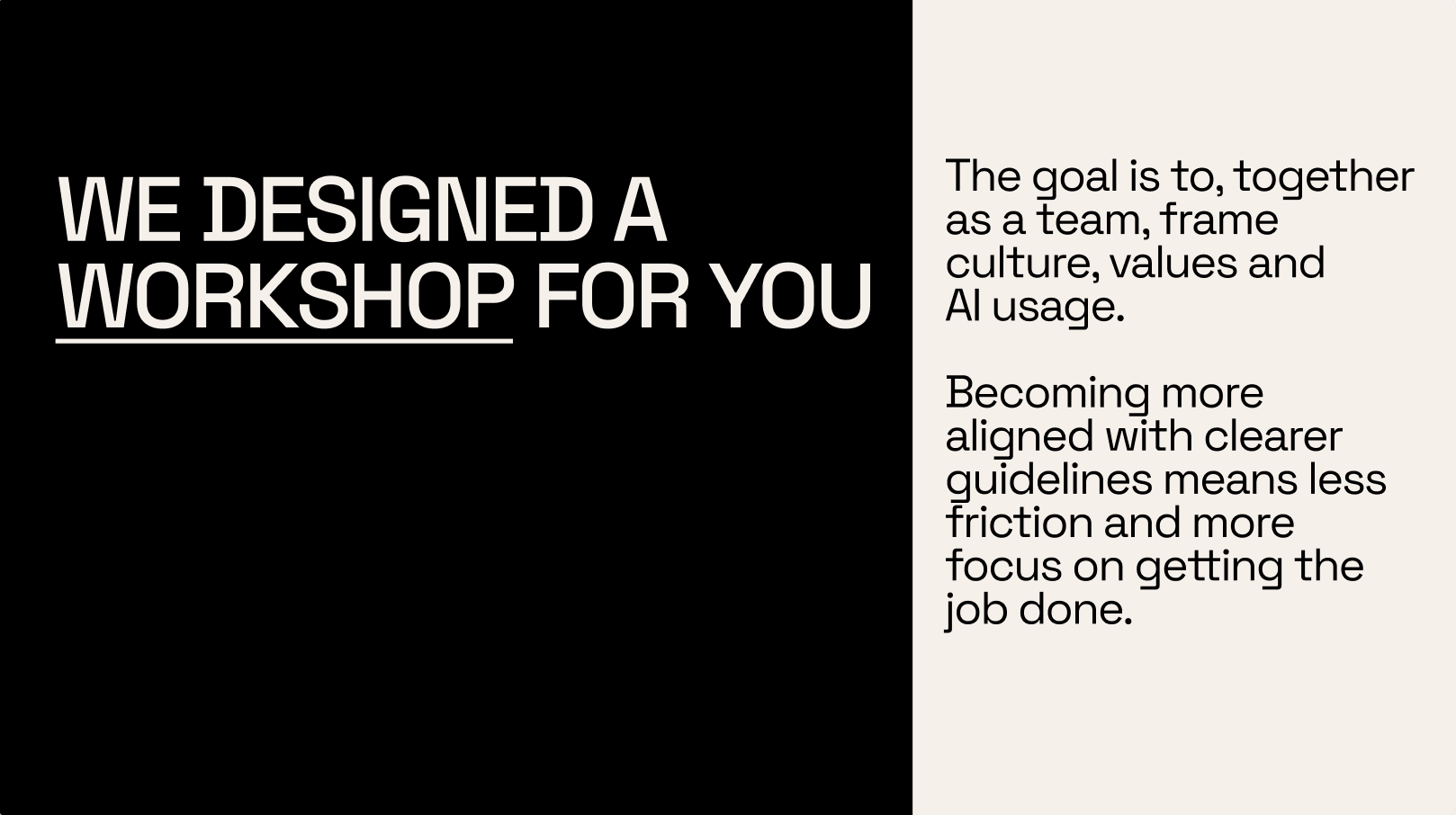
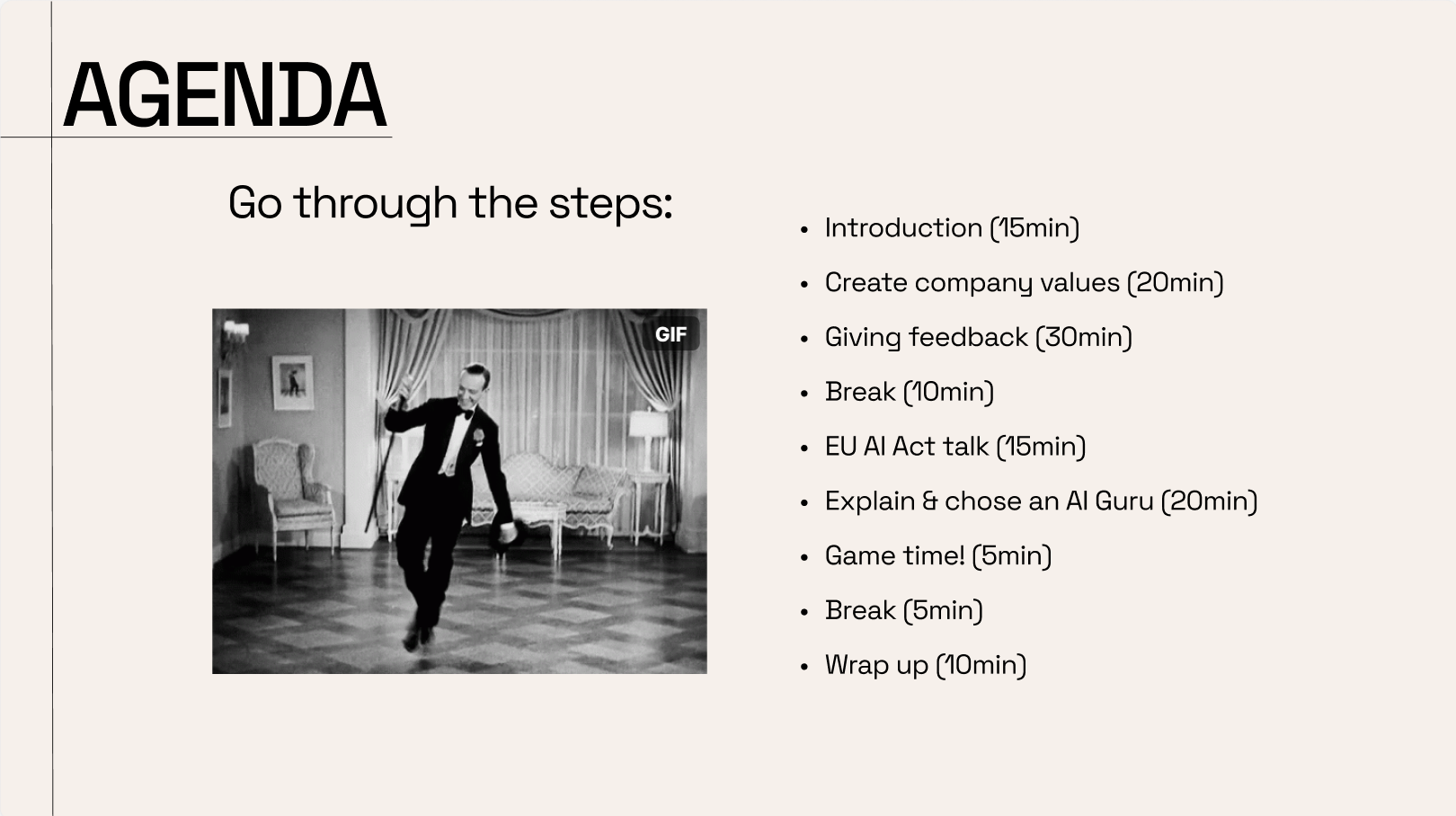
The workshop
A 2-hour, on-site session bringing it all together. On-site clearly outperformed remote for this collaborative, discussion-heavy format.
- Plain-language education on GDPR and the EU AI Act
- Co-creating the AI guidelines through group discussion
- Electing the team's AI Guru
- Closing with an online quiz/game to reinforce what was learned
Long-term plan
Folded into Brick's existing weekly meetings. The AI Guru keeps the team ahead of new tools, risks, and regulation, proactively limiting fines and legal exposure.
Update the co-created handbook, review the tool landscape, and run an anonymous survey on tool usage and satisfaction, checking whether Claude Team still fits and helping keep shadow AI from creeping back in.
4.Deliver
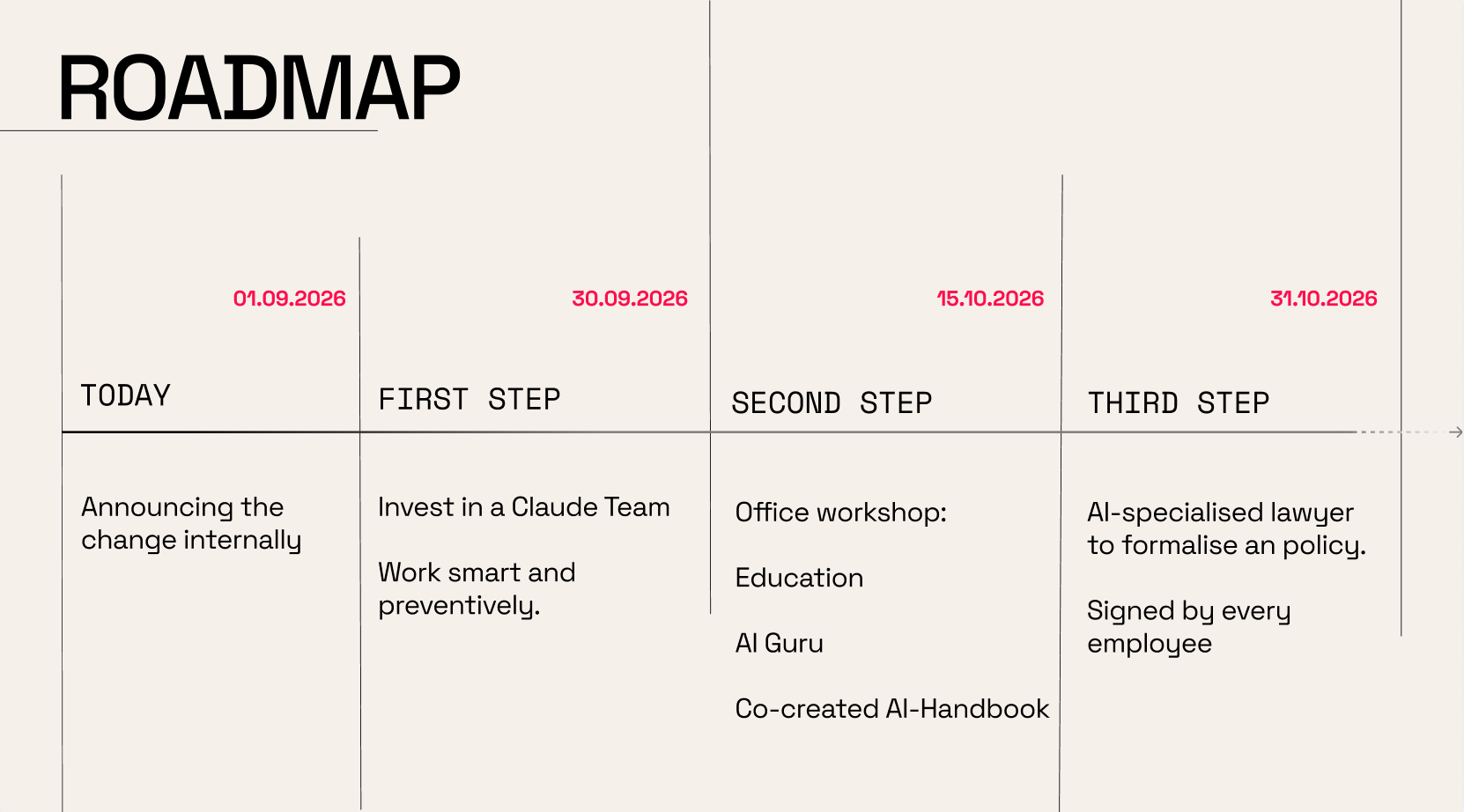
We delivered a full set of recommendations and a roadmap covering the rollout, from platform adoption and workshop, to the bi-annual review cycle.
Making the case for change
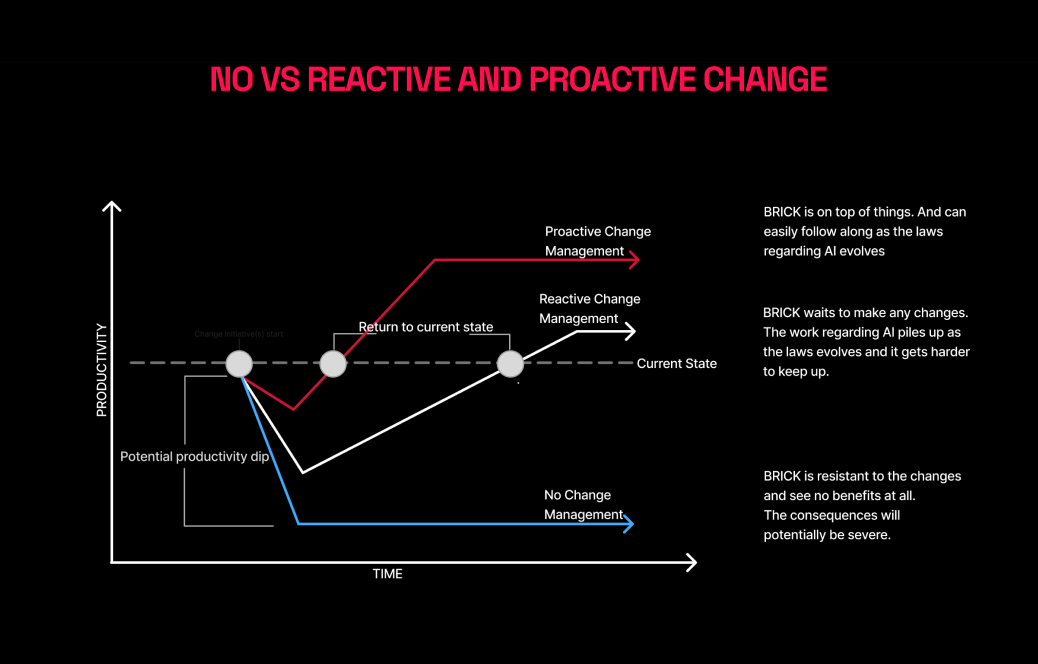
No vs. Reactive vs. Proactive: a comparison table showing leadership what happens under each path. Our forecast: AI regulation will only get stricter, so the longer Brick waits, the harder and costlier it gets to catch up. Acting proactively lets Brick shape its own practices on its own terms.
Validation
Presented directly to leadership. As a forward-looking governance plan rather than a testable product, validation came through leadership buy-in, with the bi-annual cycle built in to keep testing and adjusting over time.
The philosophy behind the policy
The aim wasn't to restrict or control, but to preserve the good vibe and give the team confidence to keep using AI creatively. A small step toward clear guardrails, without losing the trust-based culture that makes Brick who they are.
My Role as Project Manager
Managed timelines, deadlines, and communication throughout the project
Structured the research phase into individual, complementary tracks to cover a broad and fast-moving regulatory topic efficiently
Navigated a difficult scheduling reality, working around the client's busiest season and long response delays
Introduced the team to key frameworks (Issue Tree with Impact/Effort matrix, Lewin's Force Field Analysis, ADKAR, and Fair Process theory) to ground our diagnosis and recommendations in proven change management methods
Made sure the ideation phase stayed fun and creative for everyone on the team
Looked after team wellbeing through regular feedback loops
Kept communication and team meetings consistent to stay aligned despite limited feedback from the client
Reflection
This project was as much about change management as it was about AI governance. Brick didn't need to be told what to do, they needed a way to adopt structure without losing their culture of trust and autonomy. Fair Process theory shaped every recommendation: guidelines the team helped write, and a leader the team chose themselves.
Scan to play the workshop game