
A new alien culture
We were challenged to create a new alien culture, exploring digital tools as a medium for an art exhibition.
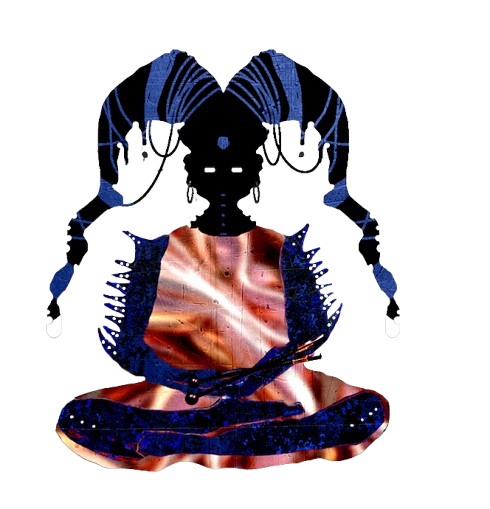
Phase 1: individual · Phase 2: Project Manager
4 people (Phase 2)
8 weeks individual + 4 weeks group = 12 weeks
Art exhibition · World building · Digital tools
Procreate, Photoshop, Blender, Miro, Slack, Makey Makey
Two phases, individual then group
Overview
We were asked to create a new alien culture, exploring digital tools as a medium for an art exhibition. The project ran in two phases: first individually over 8 weeks, where each team member built their own alien culture from scratch, then as a group over 4 weeks, where we merged our four individual worlds into one new, unified alien culture for the exhibition, using digital tools throughout.
The Challenge
Invent a believable alien culture and express it through a small set of physical or digital artifacts, using digital tools as the core medium. The brief was open on form but required real depth: not just a visual style, but a culture with its own logic, values, and internal contradictions.
Individual project
This phase was worked entirely solo. Each team member independently created their own alien culture, expressed through roughly 3 digital artifacts belonging to the same fictional world.
1.Discover
Storytelling has always been something I love, so I leaned into that from the start. I wrote 8 short stories, each imagining a different alien culture. I read them to several people and asked for honest feedback, then asked them to vote for their top 3.
Of the team, I was the only one who chose to build a full narrative first, rather than starting from a visual style.
2.Define
From the 8 stories, I narrowed it down to one:
An alien species lives on a planet where having a dark red skin tone is considered the ultimate sign of beauty. To achieve this, they absorb spores that float freely in the atmosphere. The darker you look, the more admired you are.Harvesting the spores directly from their source is poisonous, and many aliens die attempting it. This danger has turned the pursuit of a darker red colour into a widespread obsession.
To meet this need, a special cream exists. Applied to the top of the head, it accelerates the absorption of airborne spores. The cream comes in different qualities: the higher the quality, the more prestigious the effect. Access isn't free, aliens must perform services for the ruling structure to obtain it. The more luxurious the cream, the greater the submission required, sometimes as humiliating as licking the authorities' toes. The person who makes the cream is the most respected and important figure in this society. The cream itself comes from rare insects, specially crushed.
3.Develop
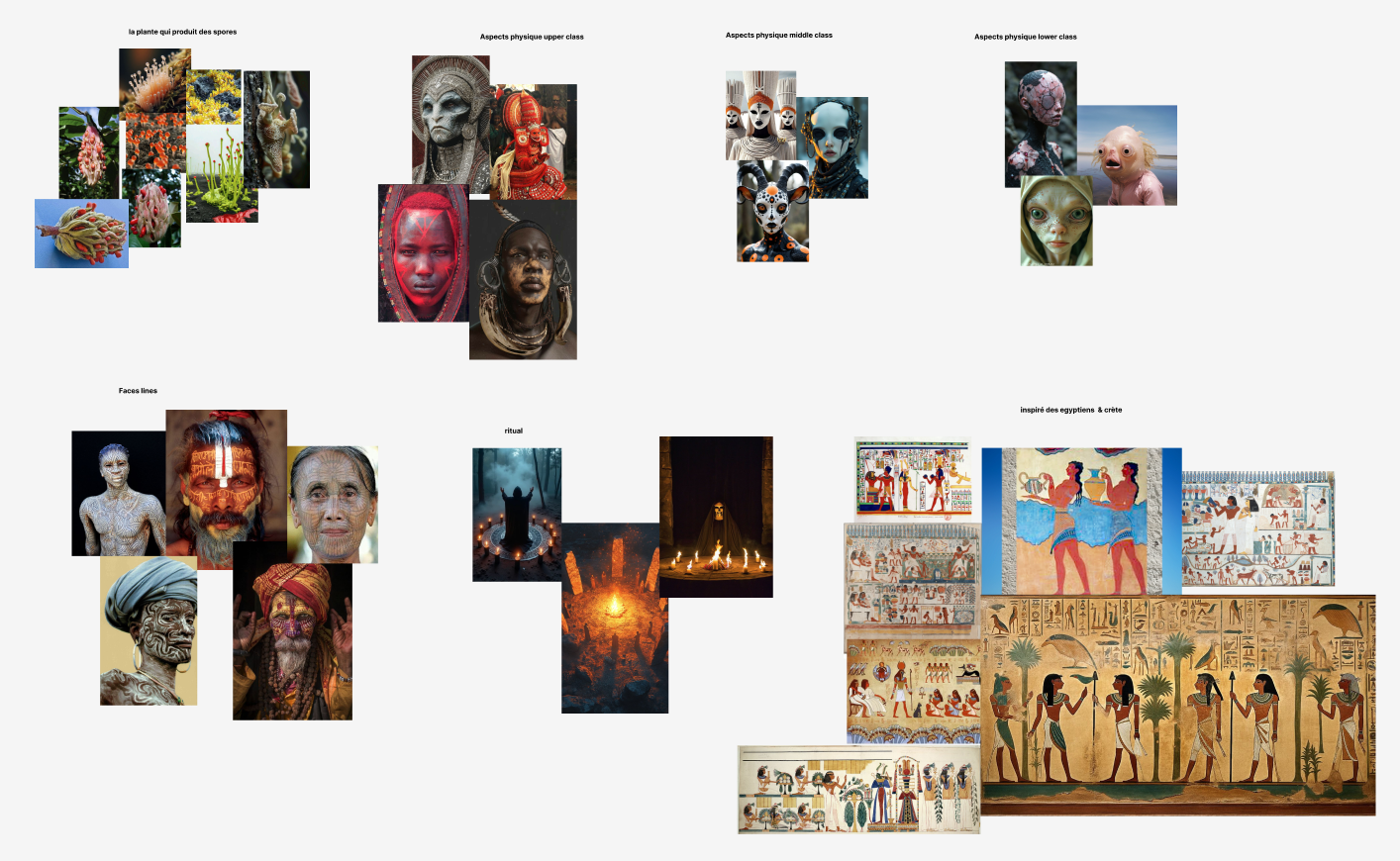
To bring the story to life, I drew on Ancient Egyptian mural painting as a reference point, using hierarchy of scale and position the way Egyptian art does: the more important you are, the bigger and higher up you appear.
The darkest red skin, the ultimate symbol of prestige. Dressed richly, seated on stylized thrones.
Dark red but less saturated, shown applying the cream to their skull in a repeated, codified gesture. Some perform tasks for the elite: carrying offerings, prostrating.
Lighter, weaker red skin, arms raised in adoration or in the act of buying or begging for the cream. Some try to harvest spores directly from the air and die, drawn as collapsed silhouettes.
Bodies laid out, greyish or withered skin.
The composition follows a horizontal frieze, like an Egyptian wall, with figures shown in profile and scaled by social rank. Recurring symbols include the cream tube styled like an ankh, spores drawn as small floating red spheres, repeated ritual gestures, and slogans written in pseudo-hieroglyphs.
From there, the process was sketch, review, iterate, repeat. Alongside the visuals, I also had to imagine how these artifacts were supposedly discovered, building a small in-world discovery story to give the objects context and credibility, the same way a museum label would.
4.Deliver
Three artifacts made up the individual piece.
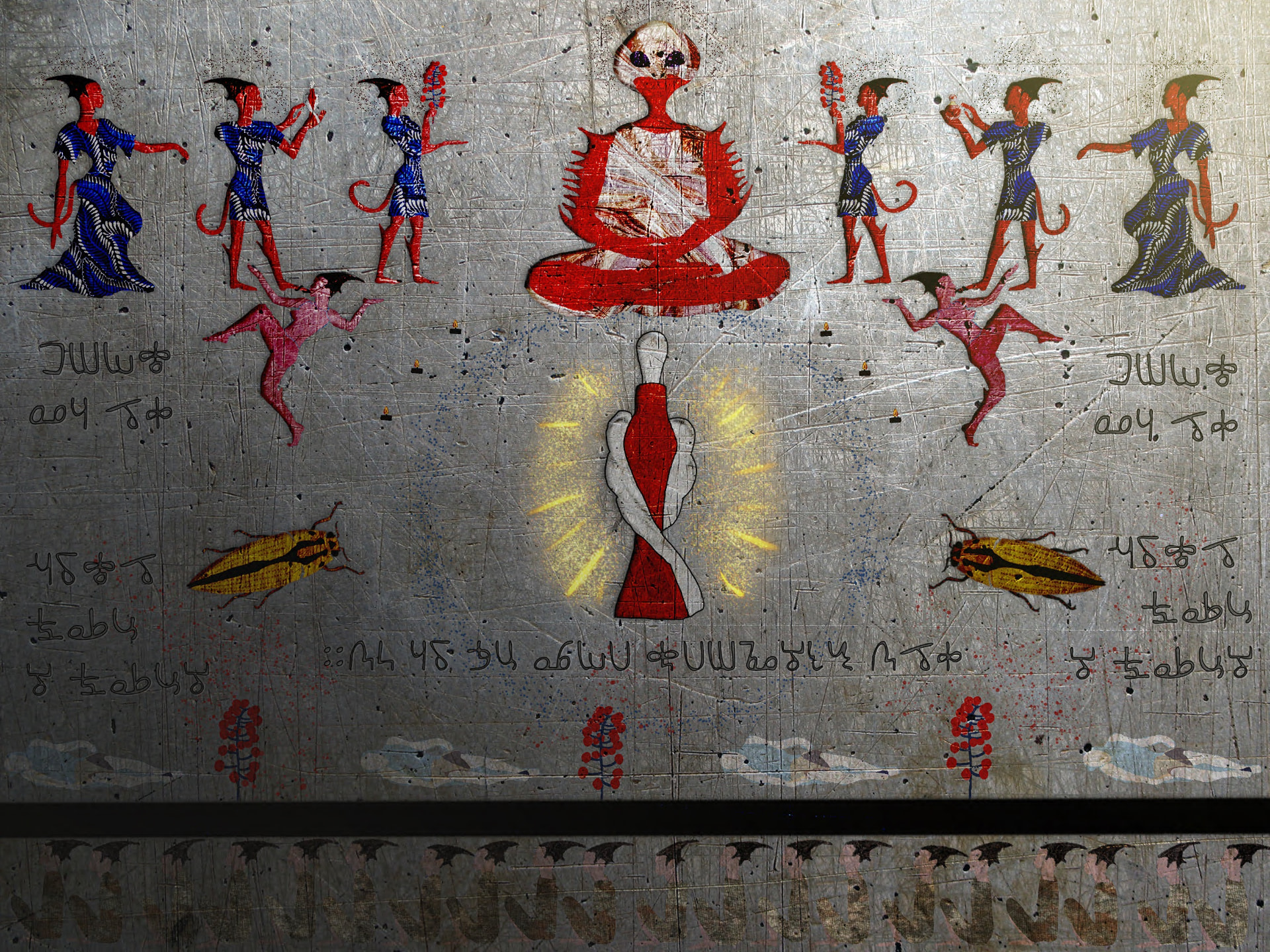
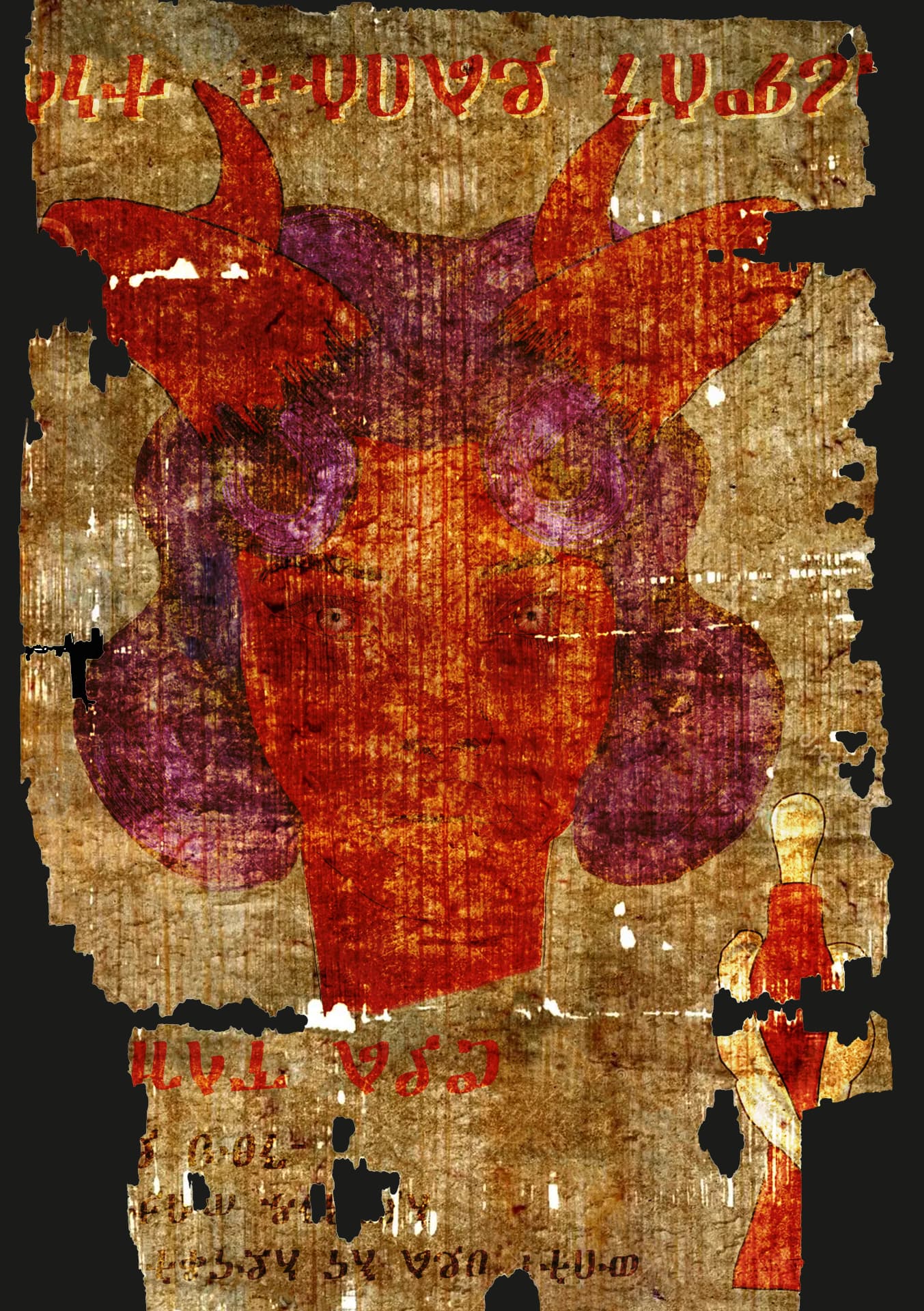
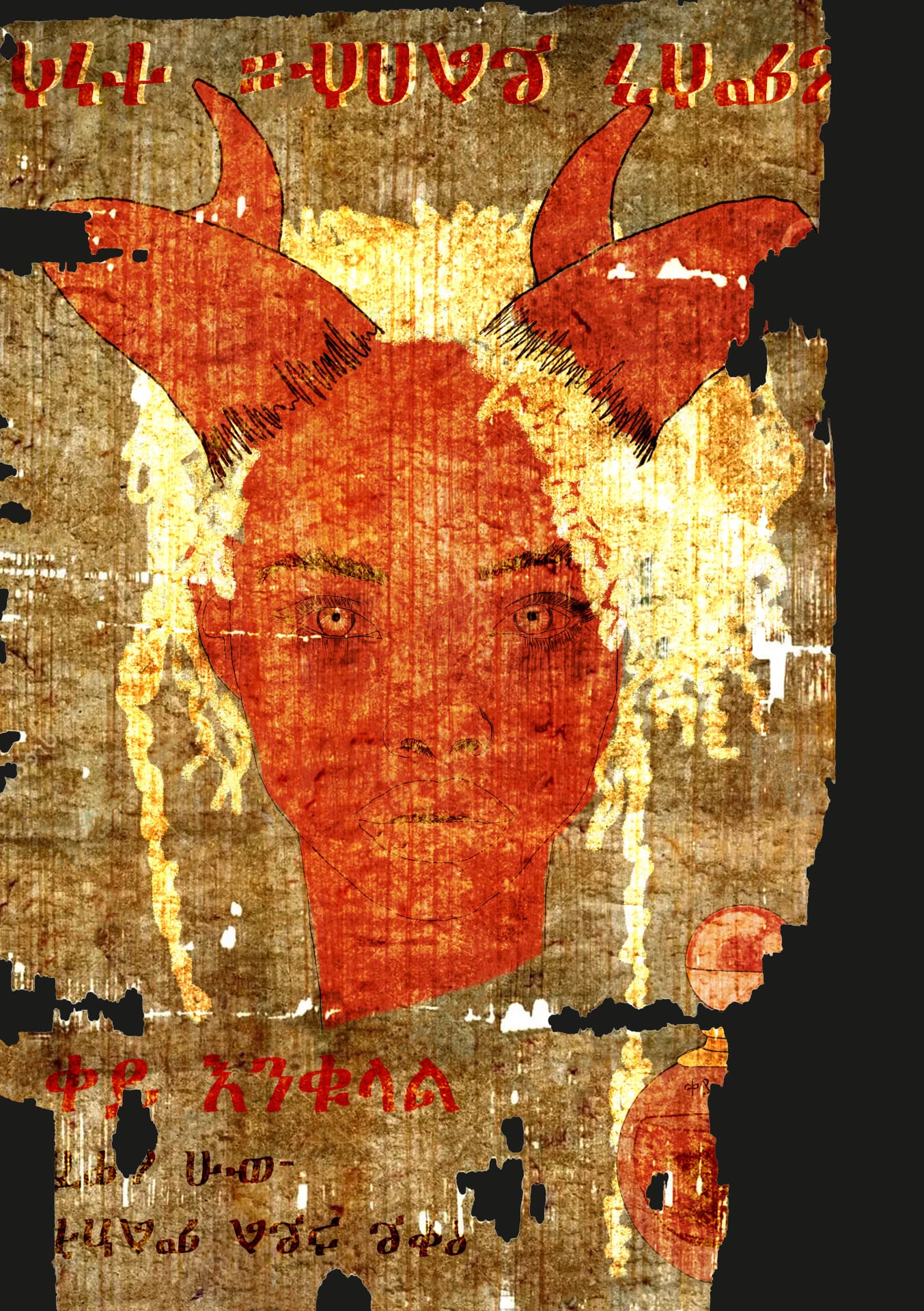
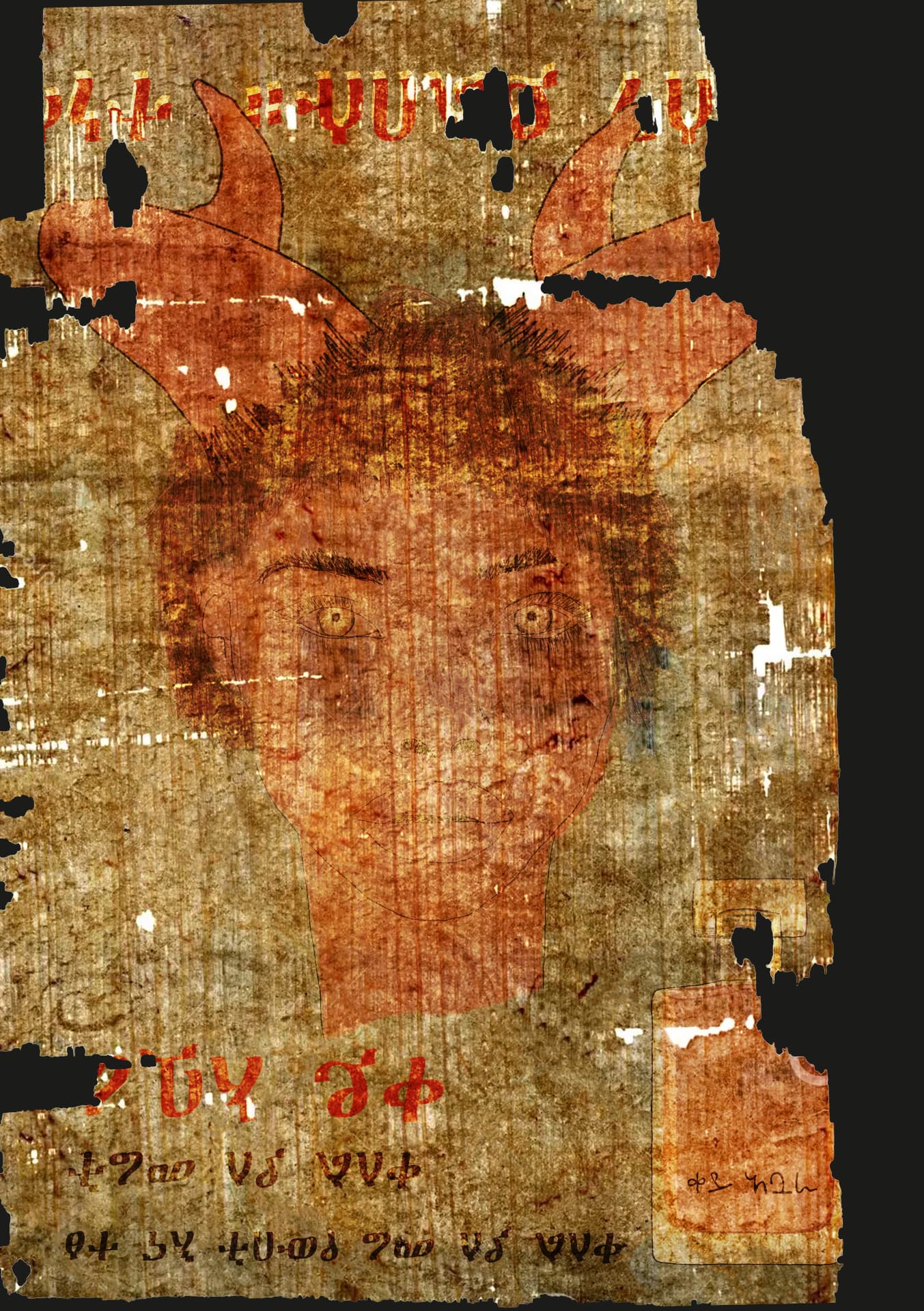
Three posters, one per spore concentration quality
Painted on metal, composed as a horizontal Egyptian-style frieze.
Each representing a different spore concentration quality.
Reconstructed digitally in 3D for the course.
Tools // Procreate (iPad), Photoshop, Blender
Group project
The goal of this phase was to bring our four individual alien cultures together and combine them into one new, unified culture for the exhibition, using digital tools throughout. One of the biggest challenges was finding common ground between four very different stories, each with its own logic, symbols, and internal world.
Role: Project Manager · Team: 4 people · Tools: Miro (collaboration), Slack (communication), Makey Makey (interactive hardware)
1.Discover
Before touching content, we ran a structured team alignment session covering purpose, vision, milestones, roles, decision-making, feedback, and how each of us handles stress. This gave the team a shared foundation: what success and failure would look like, how we'd communicate (Slack, twice-weekly check-ins), and how we'd support each other if things got stressful. Everyone also picked a skill they wanted to grow through the project: AR, music production combined with coding, generative art through code, and for me, visual design in Procreate and Photoshop.
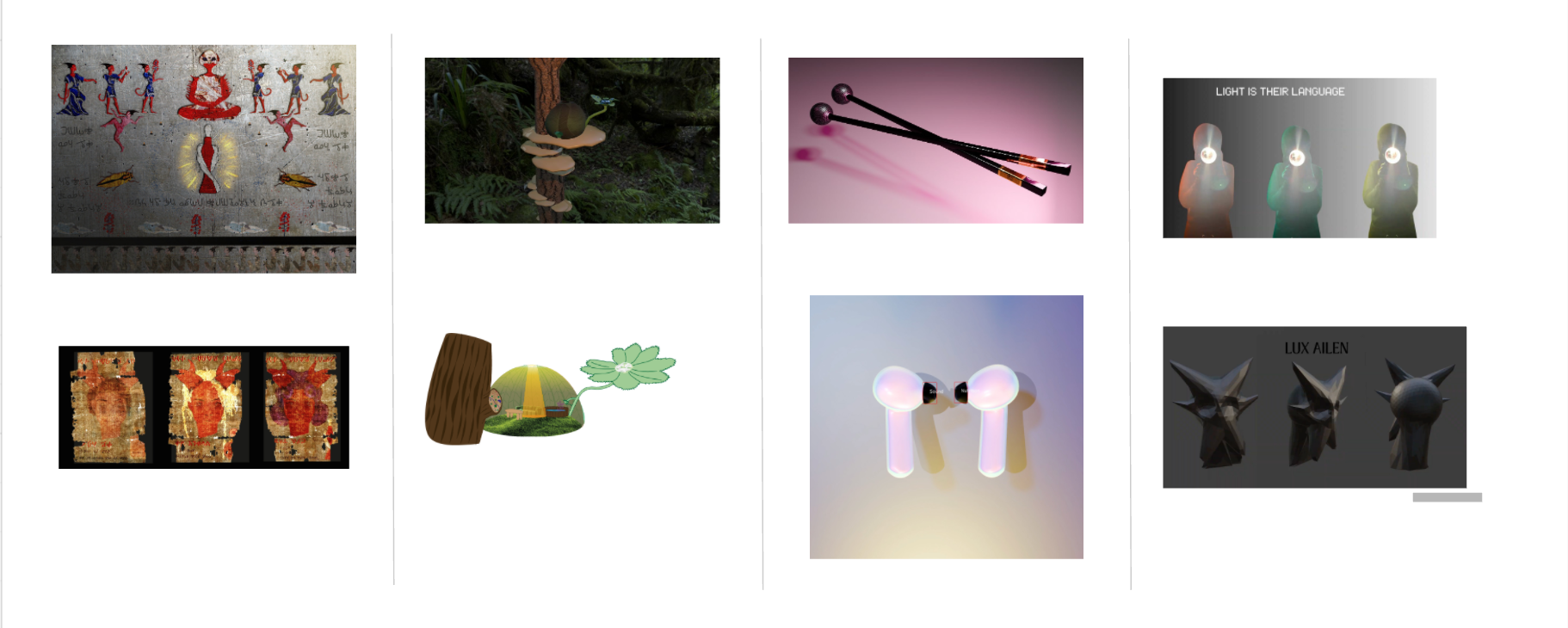
Our research meant going deep into each of the four individual alien cultures already created in Phase 1: understanding how each species communicated, what they ate, and what made their culture distinct, then looking for overlaps or complementary threads between them.
An alien communicating emotion through shifting skin colour, originally built as a 3D face in Blender.
An alien feeding on sound through chopstick-like tools fitted with microphones, modeled in 3D.
A mushroom species detached from the earth, living inside trees and building homes within them.
My own world: status, beauty and submission built around a rare cream and floating spores.
2.Define
We ran a group brainstorming session to build a brand new shared story, with one rule: it had to weave in elements from all four original worlds, but beyond that, there were no limits, nothing had to make sense by human logic. That mix of a clear constraint with total creative freedom made for one of the most fun and imaginative sessions of the project.
The story evolved through sketch after sketch until we landed on the Grey People: a society that communicates and comes alive once a year through a rare mushroom's song, their emotions shown through shifting skin colour, from grey to blue to gold.
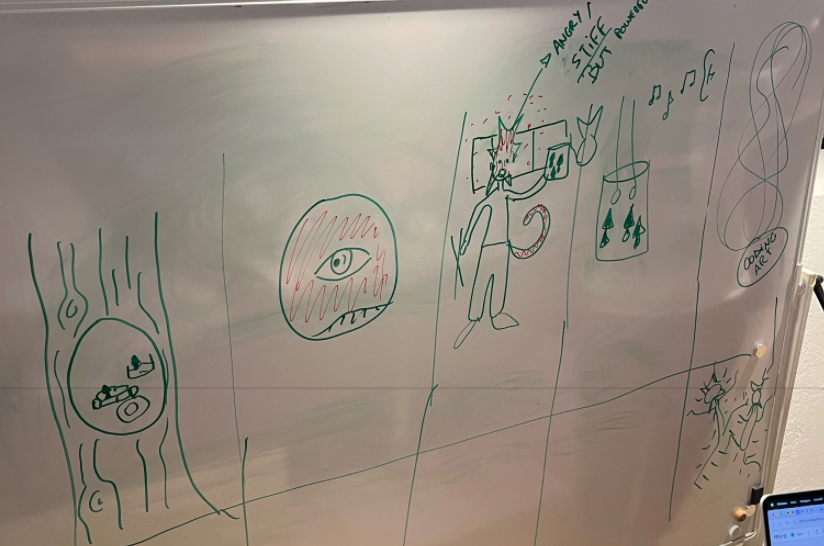
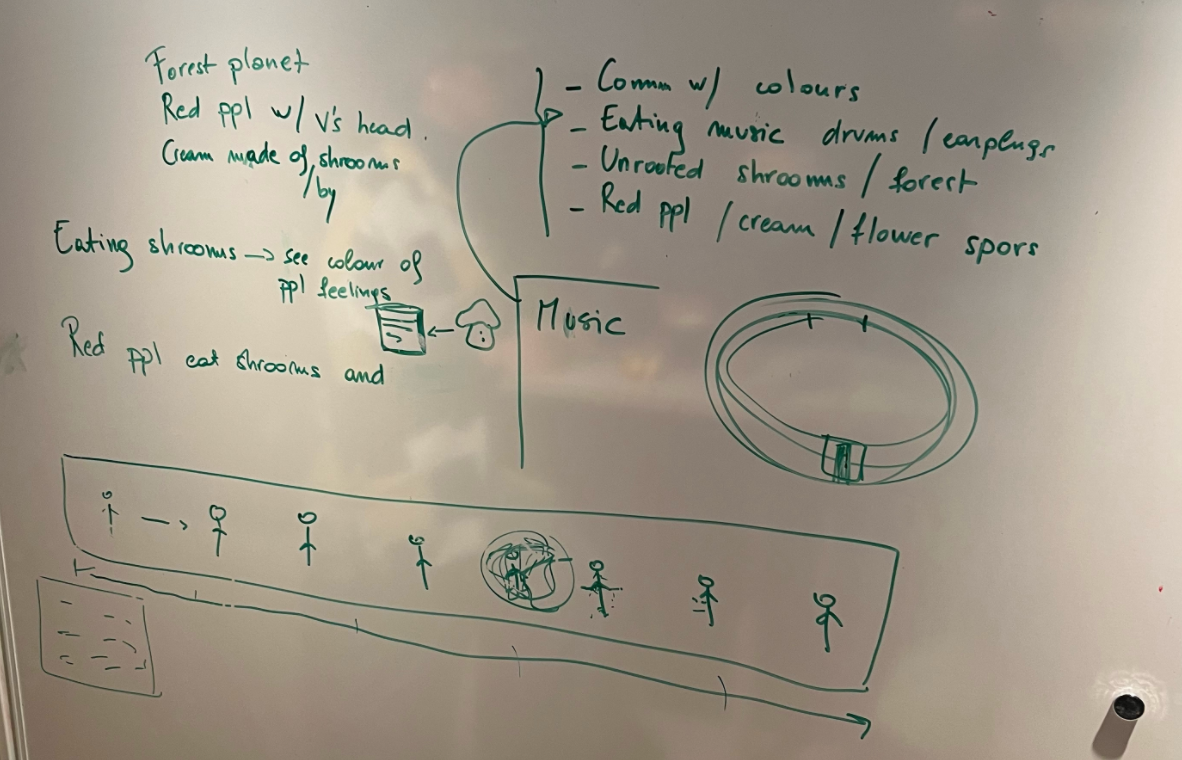
Early concept sketches
3.Develop
Our first idea was to present the story through a giant zoetrope, spinning to reveal a sequence of images. Given our limited budget and timeline, that idea wasn't realistic at this scale, so we pivoted to a screen-based installation: a narrated video, layered with an AR experience we built ourselves.
Narration and music guiding viewers through the Grey People's world, driven by a hidden computer connected to a TV screen.
Each triggering a different music track and voice storytelling, wired through a Makey Makey.
Accessible via a QR code through the Meadow app, for anyone who wanted to go further.
Built around the screen, with 2 chairs and connected headphones, one on one with a friend or a stranger.
My hands in it
I wrote the story and script for the shared world, drew all of the visuals in Procreate and Photoshop (apart from the final scene, a set of moving, coded orbs built by a teammate exploring generative art), and used AI to generate the voice for the storytelling.
4.Deliver
The final piece was an immersive, two-person installation: visitors stepped into a small tent, put on headphones, and followed the Grey People's story across 4 narrated slides, choosing which mood to explore through 4 buttons tied to different music tracks and voice storytelling, with an AR layer available through a QR code for anyone who wanted to go further.
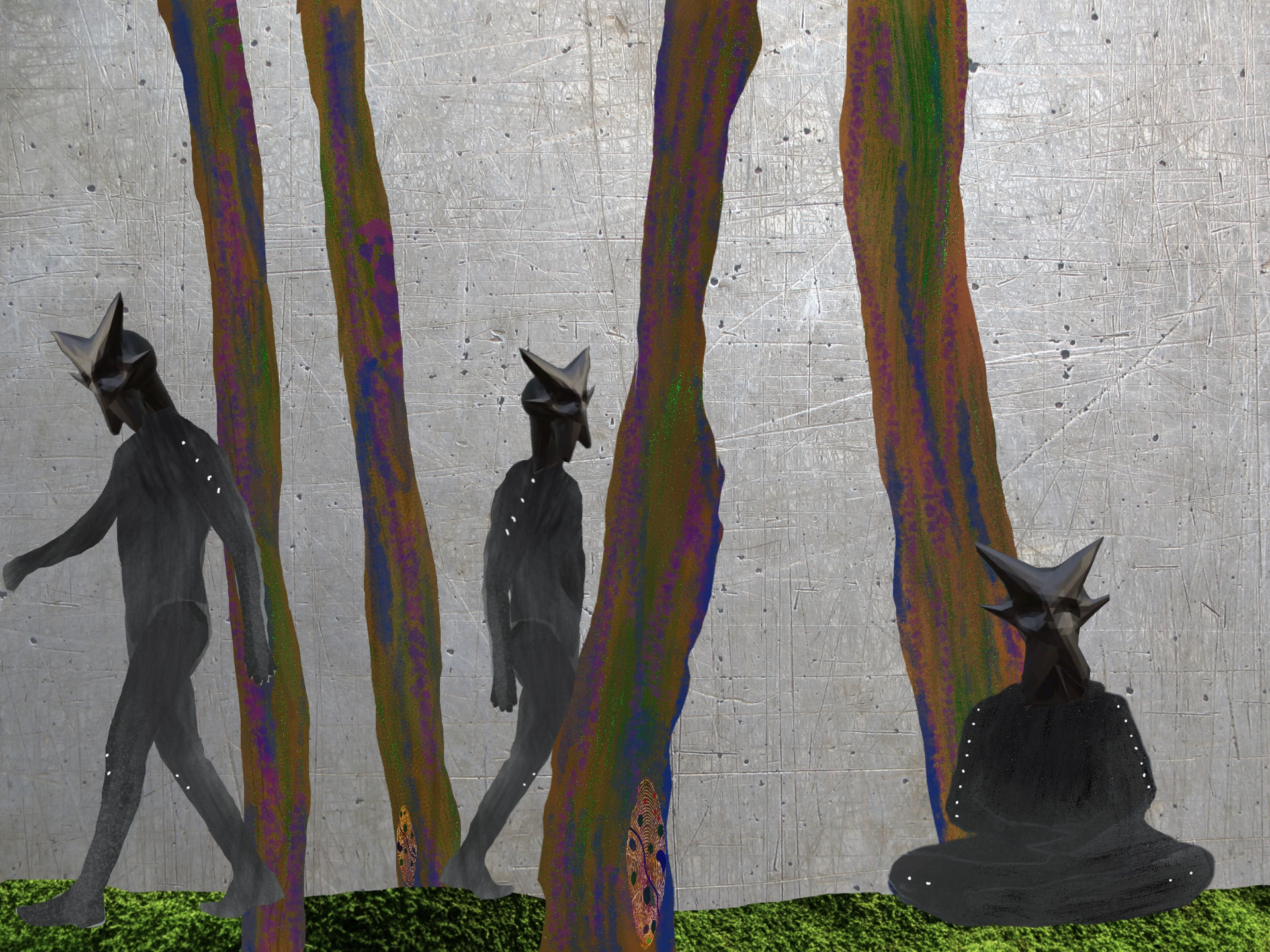
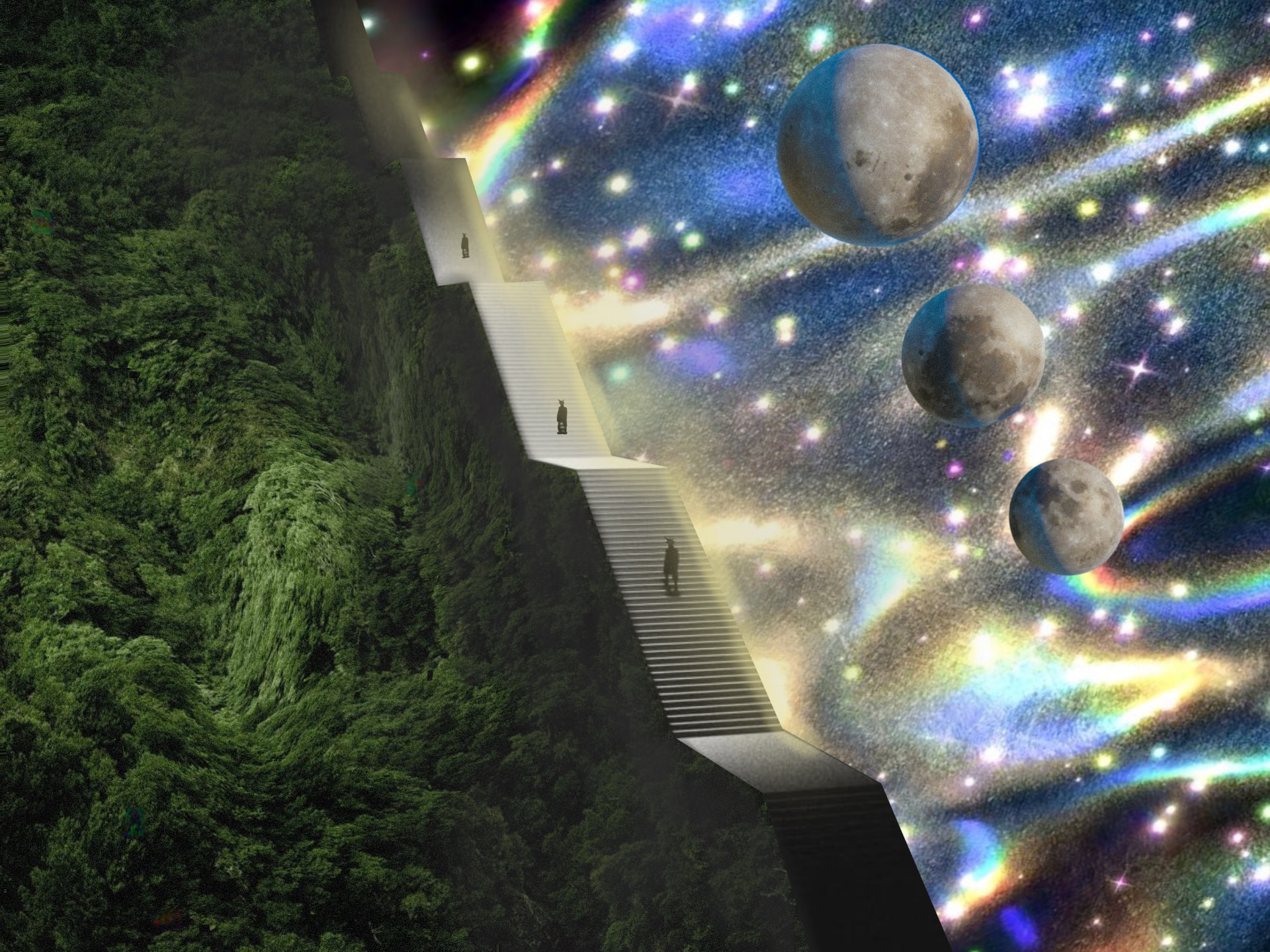
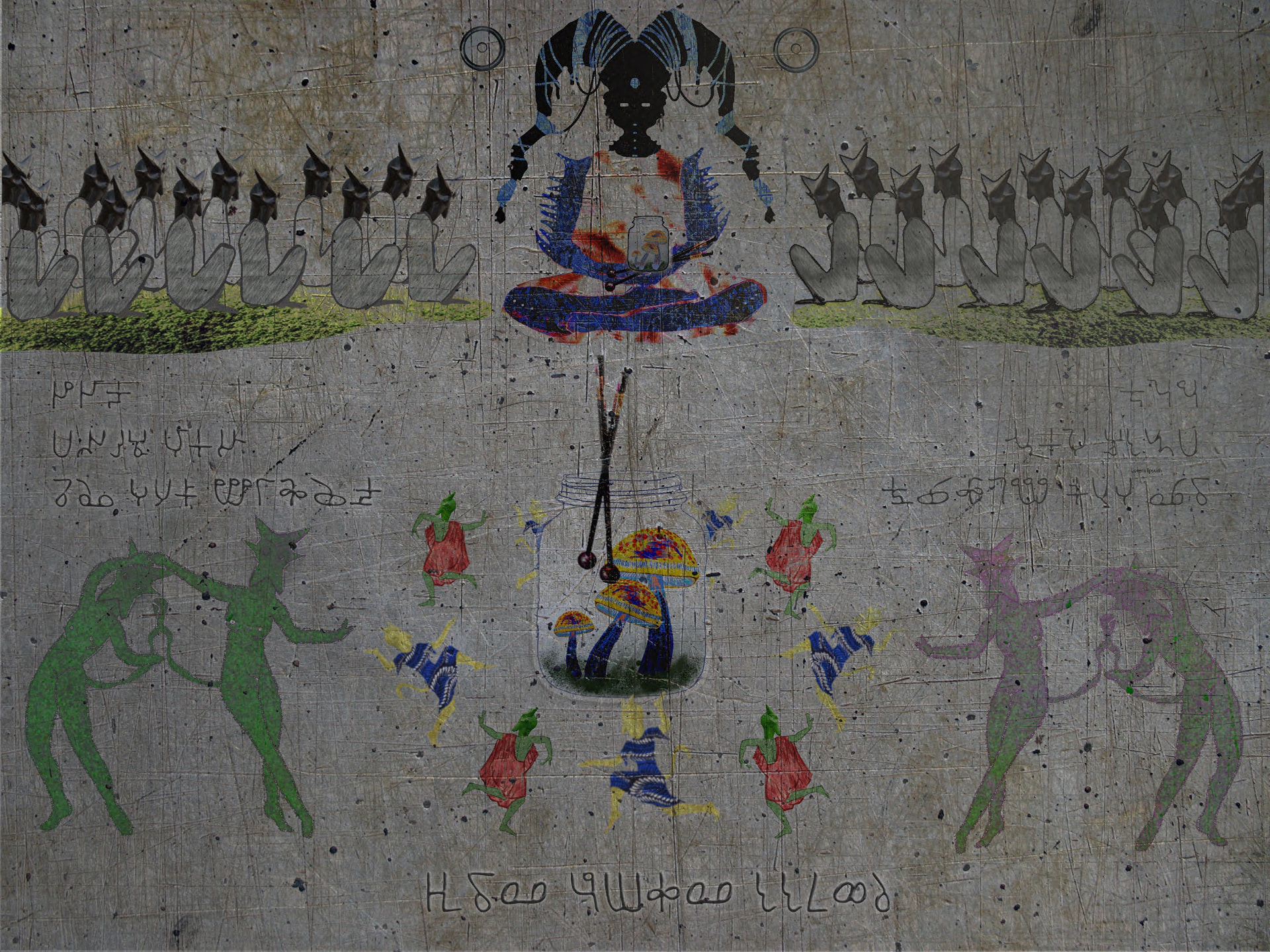
My drawings for the shared world
My Role as Project Manager
Set up the project schedule and key milestones across the 4-week timeline.
Facilitated the team's alignment workshop (purpose, vision, roles, decision-making, feedback, stress check-ins) before starting on content.
Coordinated research into all four individual alien cultures and led the brainstorming sessions that merged them into one shared story.
Managed the pivot from an unrealistic concept (a giant zoetrope) to a feasible one (screen and AR installation), given budget and time constraints.
Wrote the story and script for the shared alien world.
Led the visual production (Procreate, Photoshop) for the exhibition.
Encouraged uninhibited creativity, making sure the team felt free to think without limits within our shared constraint.
Kept the team aligned through twice-weekly check-ins and daily communication on Slack.
Made sure everyone had room to grow a new skill aligned with their own learning goals: AR, music and coding, generative art, visual design.
Reflection
Starting the project with a solid point of departure, aligning on how we'd communicate, handle stress, and use each other's skills, helped us get to know one another and work well together from day one. That foundation made communication and decision-making so much easier down the line.
This phase also grew my ability to pull a team into a creative mood and brainstorm with real freedom. I was proud of how we communicated throughout. Collaboration on this project felt like a dance: sometimes we moved together, sometimes we worked apart, but everyone was always happy to come back and dance together again. The exhibition was a real success, and we brought our different skills together smoothly. What I take away most from this project is the value of collaboration, and the confidence to hold a complex structure together.